
Why Customers Choose Us as Their Trusted Electric Vehicle Supplier
In today's rapidly growing electric mobility market, choosing the right electric vehicle supplier is more important than ever. Customers need more than just a product — they need a reliable partner who understands market demands, provides consistent quality, and supports their business growth.
As a professional electric vehicle export company, we are committed to providing high-quality electric scooters, electric motorcycles, electric tricycles, and customized mobility solutions for customers worldwide.
Here are the key reasons why customers choose us as their long-term electric vehicle partner.
That opening point — partner, not just product — is worth explaining properly, because it shapes every section that follows. An electric two-wheeler is not a one-time purchase for a distributor. It is the start of a chain: the sample you approve, the production order that follows, the spare parts your workshop needs, the second and third orders that depend on how the first vehicles performed in your customers' hands. A supplier who understands that chain behaves differently at every step: specifications are written down instead of assumed, questions get specific answers, and problems are discussed early rather than discovered at the port. The seven reasons below are the ones our customers raise most often, and for each one we have added the practical questions a buyer should ask — of us, or of any supplier — before committing to an order.
1. Wide Range of Electric Vehicle Solutions
We offer a complete range of electric mobility products, including:
- Electric scooters for urban commuting
- Electric motorcycles for daily transportation
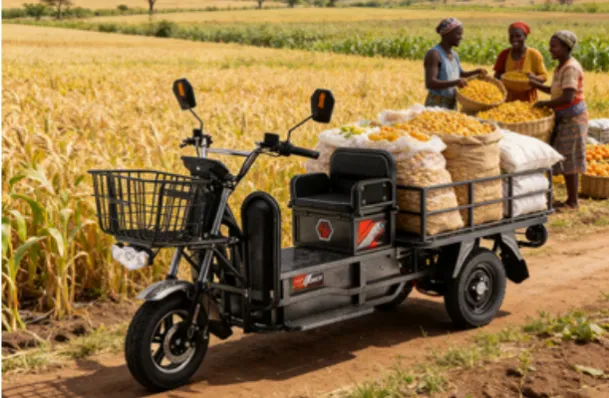
- Electric cargo tricycles for commercial use
- Delivery electric vehicles for logistics businesses
- Customized electric vehicles based on local market requirements
Whether customers are building a new electric vehicle brand or expanding their existing product line, we help them find the right solutions. One supplier, multiple electric mobility solutions.
For a two-wheeler buyer, a wide range matters in a specific way: it lets you build a coherent line-up instead of a single orphan model. A typical starting line-up might combine an accessible urban scooter for commuters and students, a sturdier electric motorcycle for longer daily travel, and a delivery-oriented two-wheeler for local logistics work — all sharing one supplier relationship, one set of order documents, and one parts channel. When you later add a model, your workshop already knows the supplier's way of specifying, packing, and documenting vehicles.
A concrete example of how to read that range: our LB-CS product page lists a 1500W motor, lithium or lead-acid battery options of 60V/72V 32Ah, a maximum speed of 45 km/h, a charging time of 4–6 hours, and a delivery time of 15 days. Those are the published figures for that model and configuration. The lesson for buyers is to ask for the same completeness for every model you consider — motor, battery options, stated maximum speed, charging time, and delivery time, in writing — rather than choosing from photographs and a price alone. If a model in any supplier's range cannot be described that clearly, it is not yet ready to anchor your line-up.
Questions to ask on range: Which models do you recommend for commuting, for longer daily travel, and for delivery work, and why? Which configurations of each model are actually available to order? Which models share parts or service procedures that would simplify my workshop's work?
2. Understanding of Global Markets
Selling electric vehicles internationally requires more than manufacturing knowledge. Every country has different requirements. Through years of experience in international trade, we understand the needs of different markets across Africa, South America, Southeast Asia, the Middle East, and other regions.
We help customers select suitable models, optimize specifications, and reduce risks before entering new markets.
"Different requirements" is easy to say and harder to work through, so it helps to break it into the questions we work through with a customer before a first order. What do riders in your market actually do each day — short urban trips, longer inter-town travel, delivery rounds, passenger work? What are the roads like on the routes that matter, including hills and poor surfaces? What charging access do riders realistically have at home, at work, or at a depot? What vehicle category and licensing rules apply in your market — a point each buyer must confirm with their own local authorities and advisers, because rules are set locally, not by the exporter. And what retail price level must the vehicle meet once shipping, duties, and local costs in your market are added, which only you can calculate from your own figures?
Our role in that conversation is to match models and specifications to the answers, and to say plainly when a requested specification does not suit the stated use. A supplier who agrees to everything without asking about your market is not being flexible; they are leaving the risk with you. Reducing risk before entering a new market also means starting sensibly: approve a sample, test it on your own roads with your own riders, and let that result — not a catalogue — decide the size of the first production order.
3. Reliable Quality Control
Quality is the foundation of long-term cooperation. Before shipment, every electric vehicle goes through strict quality inspection. Our goal is not only to deliver vehicles but also to help customers build a reliable reputation in their local markets.
For the buyer, the useful question is not whether a supplier claims inspection — every supplier claims it — but what you, the customer, can verify. We encourage buyers to make quality a documented part of the order rather than a general assurance. Agree the exact specification in writing: model, motor, battery type and size, controller, colours, branding, and packing. Ask what is checked before shipment and how completion of those checks will be communicated to you. Ask for photographs or other records of your actual order before it ships, showing the vehicles and their packing, so anything wrong can be addressed while the goods are still with the supplier.
Your side of quality control matters just as much. Inspect the sample thoroughly before you approve it, and keep written notes and photographs of the approved sample as your reference standard. On arrival of a production order, check vehicles against that standard promptly — identity and configuration first, then function: starting, acceleration, braking, lights, display, charging, and a short road test. Report any discrepancy quickly, specifically, and with photographs. That discipline protects you with any supplier, and it is exactly the working method we are set up for: clear specification, inspection before shipment, and evidence shared both ways. What quality control cannot honestly do is replace agreed terms — which is why the warranty terms, delivery time, and payment terms for your order should be confirmed in writing as part of the order itself, rather than assumed.
4. OEM & ODM Customization Support
Every market has its own requirements. A standard product may not always be the best solution. We provide flexible customization services, including:
- Logo branding
- Color customization
- Product configuration adjustment
- Battery and motor options
- Packaging design
- Product improvements based on market feedback
Customization works best when it is treated as a specification exercise, not a wish list. For branding, supply your logo files in the format requested, approve the placement and appearance on a sample or in clear photographs, and confirm the approved result in writing before production. For colours, work from named or sampled colours and approve them the same way — screen images vary, and "the blue from the photo" is not a specification. For configuration adjustments and battery and motor options, ask which combinations are actually offered for that model, what each combination changes about the vehicle's intended use, and have the final combination recorded in the order documents. For packaging design, confirm what your market needs — retail presentation, protection for the shipping method you have chosen, your branding — and approve the result before the full order is packed.
Two common mistakes are worth naming. The first is customizing before validating: a buyer who orders branding, colours, and packaging on a model they have never tested has decorated a risk. Test the standard vehicle first; customize once the base product is proven on your roads. The second is undocumented feedback. "Product improvements based on market feedback" only works if the feedback is specific — which part, which condition, which riders — and if the agreed change is written into the next order's specification rather than mentioned in passing. Handled that way, customization is how a distributor turns a catalogue model into their own market's product, season by season.
5. Competitive Pricing Without Compromising Quality
As an experienced electric vehicle exporter, we understand that cost competitiveness is important for distributors and dealers.
This section needs to be read carefully, because the cheapest vehicle is rarely the cheapest business decision. A price is only meaningful alongside the specification it buys. When you compare quotations — ours against anyone's — line the specifications up first: motor, battery type and size, controller, and what is and is not included. A lower price attached to a smaller battery or a different motor construction is not a saving; it is a different vehicle. Ask each supplier to state, in writing, what the quoted price includes and excludes, which trade term it is quoted on, and what the delivery time is. Then do your own landed-cost calculation with your own shipping, duty, and local figures, which no exporter can calculate for your market better than you can.
Where we aim to compete is on that complete picture: a clearly specified two-wheeler, honestly matched to its job, at a price that leaves the distributor a workable margin without cutting the components riders depend on daily — the motor, the battery, the controller, the brakes. A vehicle returned, repaired repeatedly, or talked down by disappointed riders costs more than a modest difference in purchase price. If a quotation you receive — from any source — looks dramatically cheaper than comparable specified offers, treat the gap as a question to be answered in the specification, not as a bargain to be closed quickly.
6. Professional Export Service & Global Shipping Experience
International purchasing can be complicated. We provide complete export support to make cooperation easier. From the first inquiry to final delivery, we focus on creating a smooth and reliable buying experience.
A smooth export process is mostly a sequence of unglamorous steps done in the right order, and buyers benefit from knowing the sequence so they can see where their order stands. It begins with a clear inquiry: target market, intended use, models of interest, configurations, and expected quantity — the more specific the inquiry, the more accurate the quotation. Next comes the written quotation and specification, then sample approval where a sample is ordered, then the production order with its agreed terms confirmed in writing: specification, price and trade term, payment terms, delivery time, and packing. Production and pre-shipment inspection follow, with photographs or records shared as agreed, then shipment documentation and handover under the agreed term.
Our company is based in Jiangxi, and our electric two-wheelers are produced at our Wuxi production base — Wuxi is China's largest electric two-wheeler production centre, and its mature supply chain is one reason we can configure and support two-wheeler models efficiently. For a buyer, the practical benefit of that base is depth of supply chain around the product: components, configuration options, and parts are close to production rather than scattered.
What should a buyer confirm in writing during this process? The exact specification and quantity; the price, currency, and trade term; the payment schedule; the stated delivery time — for example, the LB-CS product page states a delivery time of 15 days for that model — and the delivery time that applies to your own order; the packing method; the documents that will be provided with the shipment; and the contact who will update you. If any of those items is vague in a supplier's paperwork, slow down and clarify it before payment, not after shipment. That advice applies to us exactly as it applies to anyone else, and we welcome it.
7. Long-Term Partnership Mindset
We believe successful business relationships are built on trust, communication, and continuous improvement. Many customers choose us not only because of our products, but because we provide: Fast response; Professional communication; Flexible solutions; Reliable delivery; Continuous support after sales.
We aim to become a long-term partner for distributors, wholesalers, and retailers around the world.
Long-term partnership is tested after the first shipment, not before it, so judge it by the after-sales structure you put in place together at the start. Agree which spare parts you will stock locally from the first order — motors, controllers, batteries, chargers, displays, throttles, and other wear and electrical items appropriate to your models — so routine repairs do not wait on international shipping. Agree how a technical question from your workshop reaches us, what information and photographs you will send with it, and how answers will come back. Agree how feedback from your riders is collected and reviewed before the next order's specification is set. None of that requires trusting a promise; it requires setting up channels while the first order is being placed, which is precisely what a partner-minded supplier should be willing to do.
Continuous improvement then becomes a rhythm rather than a slogan: each order's specification reflects what the previous order taught both sides about your market. Models that suit your roads are reordered and refined; weak points identified by your riders are addressed in writing in the next specification; your parts stock grows to match the vehicles actually running in your market. That is the compounding advantage of staying with one supplier who knows your line-up — and it is available only if orders, specifications, and feedback are documented well enough to build on, which is the working standard we propose from the first inquiry.
If you are choosing a supplier for electric scooters or electric motorcycles — for a first order or for a line-up you are expanding — send us your target market, your intended use, the models you are considering, and your expected quantity. Contact us at saravehicle@jxlubon.com or on WhatsApp at +86 189 7035 3905, and let us work through the specification, the sample, and the terms with you, in writing, step by step.
Email: saravehicle@jxlubon.com Tel: +86 18970353905 ADD: Anzhen, Xishan District, Wuxi City