
Electric Vehicles for Africa: Opportunities and Market Potential
Looking for Electric Vehicles for Africa?
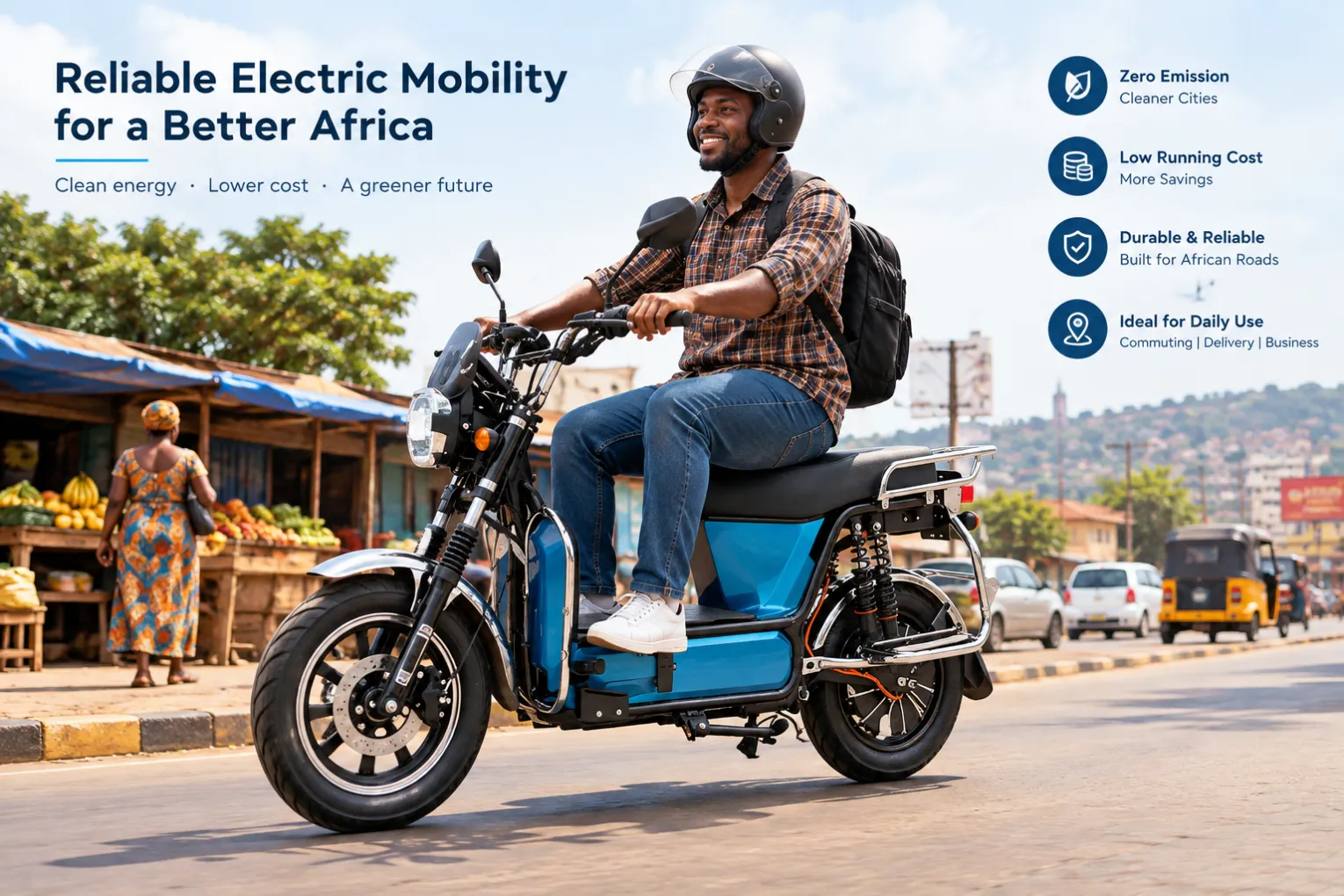
Africa is becoming an important market for electric mobility. Rising fuel costs, growing cities, last-mile delivery, and demand for affordable transportation are creating new opportunities for electric scooters, electric motorcycles, and electric delivery vehicles.
For importers, distributors, and wholesalers, the key is choosing electric vehicles that match local road conditions, customer needs, and target prices.
That last sentence is the whole strategy in one line, and this article works through it in order. The opportunity across African markets is real, but it does not reward the buyer who simply imports the cheapest available vehicle. It rewards the buyer who studies one city or one region carefully, chooses a two-wheeler that fits its roads, its riders, and its charging reality, supports it with spare parts, and builds a reputation trip by trip. Everything below is written for electric two-wheelers — scooters, motorcycles, and two-wheeler delivery vehicles — because that is where most new importers and distributors will start, and where the fit between product and market can be tested most directly with a sample before a larger order is placed.
Why Electric Vehicles Are Growing in Africa
Electric mobility can offer several advantages for suitable applications:
- Lower energy costs
- Reduced routine maintenance
- Easy urban transportation
- Suitable for delivery and commercial use
- Flexible configurations for different markets
These advantages make electric vehicles increasingly interesting for daily commuting, delivery services, and commercial transportation.
Each advantage deserves a buyer's test rather than a buyer's assumption. Lower energy costs matter where petrol prices weigh on riders who earn daily — a delivery rider, a commuter, a small business moving goods across town — but the saving a rider actually sees depends on your market's fuel and electricity prices, which you should work out with your own local figures before you build a sales pitch on them. Reduced routine maintenance is real in the sense that an electric two-wheeler has no engine oil, spark plugs, or fuel system to service, but it does not mean no maintenance: brakes, tyres, suspension, and electrical connections still need regular attention, and dusty or wet conditions make that attention more important, not less. Easy urban transportation is easy to verify — ride the vehicle in your own city's traffic, at your own peak hours. Suitability for delivery and commercial use should be tested with a loaded vehicle on a real delivery round, not judged from a showroom. And flexible configurations are only an advantage if you use them deliberately, choosing the motor, battery, and fittings for your conditions instead of accepting whatever configuration happens to be offered.
The honest framing for your customers is this: an electric two-wheeler is not automatically better than the petrol vehicles they know. It is better for particular jobs, in particular places, when the product has been chosen and supported properly. Importers who sell it that way — job by job, with evidence from local testing — build the trust that a second and third order are made of.
Electric Scooters for Africa
Electric scooters are suitable for urban commuting, students, workers, and short-distance transportation. The right electric scooter is not necessarily the cheapest model. It should provide a practical balance between price, performance, durability, and operating cost.
To find that balance for your city, start with the rider's day, not the catalogue. How far is the typical commute, and is it one trip or several trips chained together? Where will the scooter be parked and charged — at home, at a workplace, at a shop? Are the roads on that route paved throughout, or do they include broken surfaces, unpaved stretches, speed bumps, and standing water in the rainy season? A scooter that suits a short, paved commute for a student is a different specification decision from a scooter that a worker rides across a whole city, in all weathers, carrying a bag of tools.
Then test like a buyer, not a tourist. Order a sample and ride your actual routes, at the times your customers ride them. Check the pull-away at junctions, the comfort over your worst regular surface, the behaviour of the brakes in traffic, and how the vehicle feels at the end of the day compared with the morning. Ask riders from your target group to try it and listen for the complaints you would not think of yourself — where they carry things, how they lock the vehicle, what they think of the seat on a longer trip. Record all of it in writing. A common mistake is to choose the scooter on purchase price and discover, after the first shipment, that the specification was wrong for the route — a mistake a single honestly tested sample would have prevented. The price question should come last in this section, and it should be asked correctly: not "which scooter is cheapest?" but "which scooter, at a landed cost I have calculated with my own shipping and local figures, does this job reliably at a retail price my customers can pay?"
Electric Motorcycles for Africa
Motorcycles are widely used for transportation and commercial activities across many African markets, making electric motorcycles an attractive option for urban mobility and delivery.
Because motorcycles already do serious work in many markets — carrying passengers, moving goods, covering longer distances between towns as well as inside cities — the electric version is judged against a demanding standard. Riders compare it with the petrol motorcycle they know, on the same roads, with the same loads, in the same heat. That comparison should shape your buying process. Choose the test route to include the work the motorcycle will actually do: the longer road, the hill, the rougher stretch, the stop-start market traffic. Test with the load or passenger the rider normally carries, because an unloaded test flatters every vehicle and tells you almost nothing about commercial use.
Pay particular attention to the complete configuration rather than a single headline figure. Motor, controller, and battery work as a system, and the right question for a supplier is which combinations are offered for the model, which combination they recommend for the use you describe, and why. Have that recommendation and the final agreed configuration recorded in your order documents. Heat and sustained work are the other realities of commercial riding: a motorcycle that works all day in a hot climate should be tested across a full working pattern, not a short loop, and performance at the end of that test matters more than performance in the first ten minutes. Finally, think about the workshop from the beginning. A commercial motorcycle that cannot be repaired quickly in your city loses its owner income while it waits, so the model you choose must be one whose parts and service procedures your mechanics can support — which leads directly to the parts section below.
Electric Delivery Vehicles for Last-Mile Delivery
The growth of e-commerce, food delivery, and local logistics is creating demand for efficient electric delivery vehicles. They can be used for: Food delivery; Parcel delivery; Grocery delivery; Retail distribution; Local logistics. Different configurations can be selected according to the application and local market.
For two-wheeler delivery work, the buying decision starts with the round, not the vehicle. Map a typical round in your city: how many stops, how far apart, what the rider carries on each leg, where the vehicle waits between jobs, and where it can charge. Food delivery rewards quick turnaround and easy low-speed handling in traffic. Parcel and grocery work put more weight on carrying arrangements and on a full day of repeated stops. Retail distribution and local logistics may involve regular routes between shops and a depot, which makes charging at the depot a practical question to settle before the fleet is ordered, not after.
Then run the numbers and the test that a fleet buyer should always run. Test one vehicle, loaded, on a real round with a real rider, and record what happens: time, energy used across the day as shown by the vehicle's own instruments, rider feedback, and any point where the vehicle or its carrying arrangement got in the way of the job. Work out your cost picture with your own figures — your purchase price, your local energy and fuel comparisons, your riders' pay structure — rather than adopting a cost claim from any supplier's marketing, ours included. If the pilot round works, scale in steps, keeping the same specification so your parts stock and your mechanics' experience compound. If it does not work, the sample has done its job cheaply, and the configuration conversation with your supplier can be specific: this route, this load, this problem.
One practical example of reading a delivery-relevant specification: our LB-CS product page lists a 1500W motor, lithium or lead-acid battery options of 60V/72V 32Ah, a maximum speed of 45 km/h, a charging time of 4–6 hours, and a delivery time of 15 days. For a delivery buyer, the useful exercise is to take figures like those — for any model from any supplier — and test them against your round: does the stated charging time fit your depot's schedule, and is the configuration on offer the one your pilot actually tested? Confirm the answers, and the agreed configuration, in writing before a fleet order.
Choosing the Right Electric Vehicle for Africa
Africa is not a single market. Product requirements can vary significantly between countries and cities. Before importing, buyers should consider:
Road conditions: Choose suitable tires, suspension, ground clearance, and motor power.
Climate: Heat, dust, and humidity should be considered when selecting electrical components and batteries.
Charging: Battery capacity and charging methods should match actual daily usage and local infrastructure.
Target price: The product should provide the right balance between specifications and customer purchasing power.
Treat those four points as a written checklist for each city you serve, because the answers change from place to place. On road conditions, ride the routes yourself and note where a low vehicle grounds out, where suspension is punished, and where surface water collects; then discuss tyres, suspension, ground clearance, and motor power with your supplier in those specific terms. On climate, be concrete about your conditions — sustained heat, fine dust, coastal humidity, a defined rainy season — and ask how the electrical components and battery arrangement you are ordering suit them; then include dust and wet-weather checks in your own routine inspection of the sample and of incoming shipments. On charging, describe your riders' real access honestly: home charging, workplace charging, depot charging, and how reliable that supply is across the day. A specification chosen for dependable all-night charging may be the wrong specification where supply is interrupted, and that is a conversation to have before ordering, using your local knowledge. On target price, work backwards from the retail price your customers can pay, through your own landed costs, to the specification you can afford — and if the arithmetic forces a compromise, compromise on extras before you compromise on the motor, battery, brakes, and tyres the rider depends on.
Two further disciplines protect every first order. First, confirm your market's own import, registration, and vehicle-category requirements with your local authorities, clearing agent, or compliance adviser. Those rules are set locally, differ between markets, and are not something an overseas supplier can settle for you — build the time for them into your launch plan. Second, confirm the commercial terms of the order itself in writing with your supplier: the exact specification, price and trade term, payment terms, delivery time, packing, the documents to be provided, and the warranty terms that actually apply to the order. Do not assume a warranty period, a certification, or any figure that has not been stated for the vehicle you are buying.
EV Parts & After-Sales Support
A reliable supply of EV parts is important for distributors and fleet operators. Common replacement parts include: Motors; Controllers; Batteries; Chargers; Displays; Throttles; DC converters; Wiring harnesses; Brake and lighting components. Working with an electric vehicle supplier that can also support compatible EV parts can simplify procurement and after-sales service.
After-sales support is where an African market is won or lost slowly. A rider whose vehicle is repaired the same week tells neighbours the brand can be trusted; a rider who waits a season for one controller tells them the opposite. Plan parts as part of the vehicle order, not as an afterthought. With your first shipment, stock the electrical items your models depend on — motors, controllers, chargers, displays, throttles, DC converters, and wiring harnesses — alongside the brake and lighting components and other wear items your workshop expects to replace in normal service. Ask the supplier to identify each part against the exact model and configuration you ordered, keep that parts list with your order documents, and photograph the fitted parts on your approved sample so replacements can be matched without argument.
Build the workshop habit to match the stock: a simple arrival and service checklist, a record for each vehicle of what was replaced and when, and a monthly review of which parts you actually consumed. That record tells you what to reorder before you run out, and it tells your supplier exactly what your market needs — which makes the next parts order faster and more accurate for both sides. Fleet operators should go one step further and hold parts at the depot where the vehicles are charged and dispatched, so a repair does not begin with a trip across the city.
Why Work With an Electric Vehicle Manufacturer?
For international buyers, choosing a supplier is about more than product price. At Lubon Motor, we supply electric mobility products for distributors, importers, wholesalers, and business customers worldwide. Our product range includes electric scooters, electric motorcycles, electric delivery vehicles, and EV parts, with flexible configurations for different markets. Whether you are looking for a new electric scooter supplier, an electric motorcycle supplier, or a reliable electric mobility partner for your African market, we can help you find suitable products and configurations.
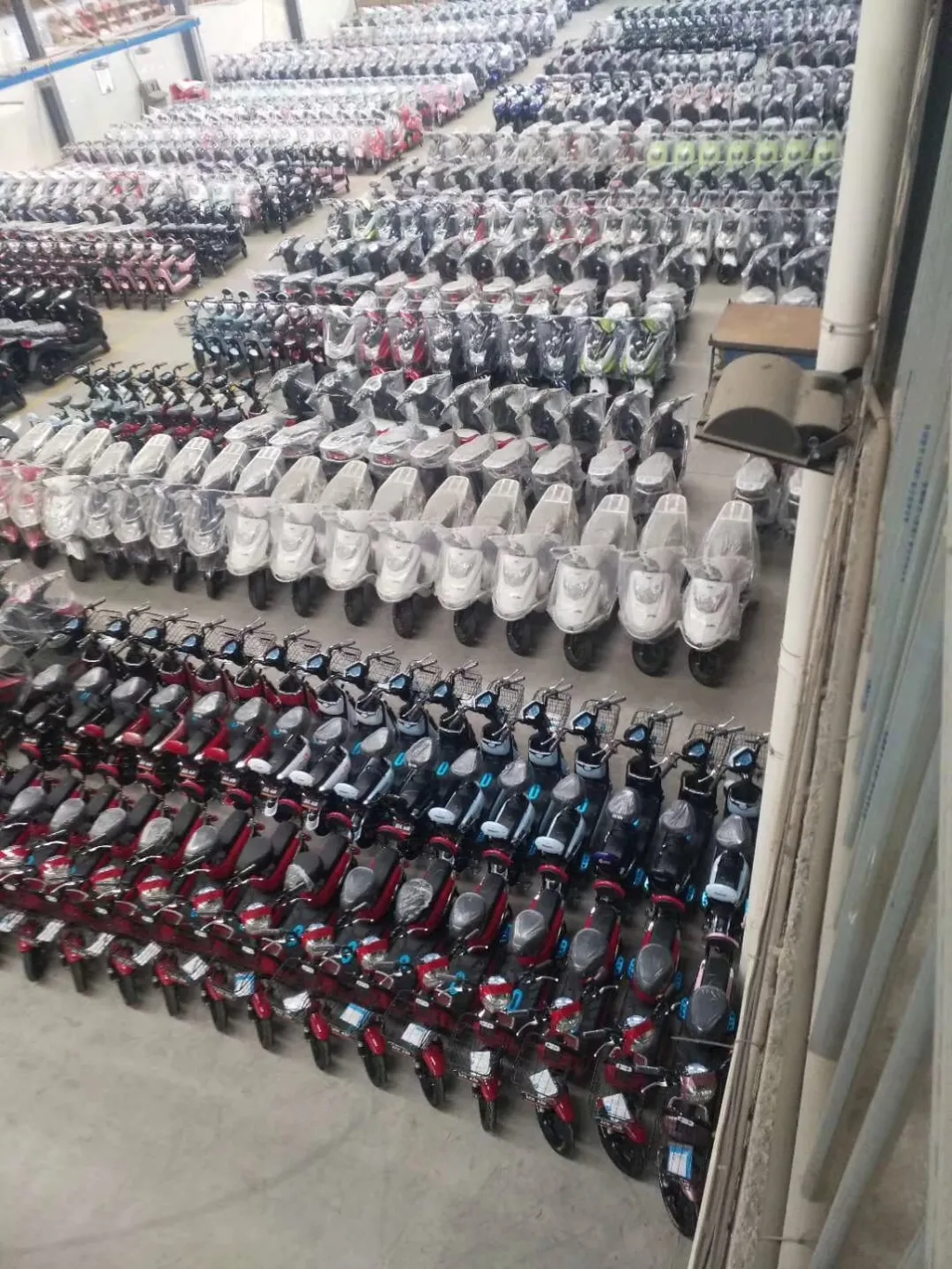
A few facts help place that offer. Our company is based in Jiangxi, and our electric two-wheelers are produced at our Wuxi production base — Wuxi is China's largest electric two-wheeler production centre, and its mature supply chain supports the configuration options and parts availability that the sections above depend on. What we ask of a new African-market customer is the same discipline this article recommends to every buyer: start with your market's real conditions, test a sample on your own roads, agree the specification and terms in writing, and stock the parts your riders will need. A supplier relationship built that way can grow order by order, because each order rests on evidence from the last one rather than on promises from either side.
Looking for Electric Vehicles for Africa?
Tell us your target market, product requirements, and expected quantity.
Let's discuss the right electric mobility solution for your business.
To make that first conversation productive, include the details this article has worked through: your city and the roads your riders use, the job the vehicles will do — commuting, passenger or commercial riding, or delivery rounds — your charging situation, your target retail price level, and the quantity you expect for a sample and for a first order. The more of that you share, the more specific our model and configuration recommendations can be. Contact us at saravehicle@jxlubon.com or on WhatsApp at +86 189 7035 3905.
Email: saravehicle@jxlubon.com Tel: +86 18970353905 ADD: Anzhen, Xishan District, Wuxi City