
CKD or Fully Assembled? How Electric Scooter Shipping and Packing Decide Your Landed Cost
CKD, SKD or fully assembled changes your freight, duties and assembly work. A packing and arrival checklist for electric two-wheeler importers.
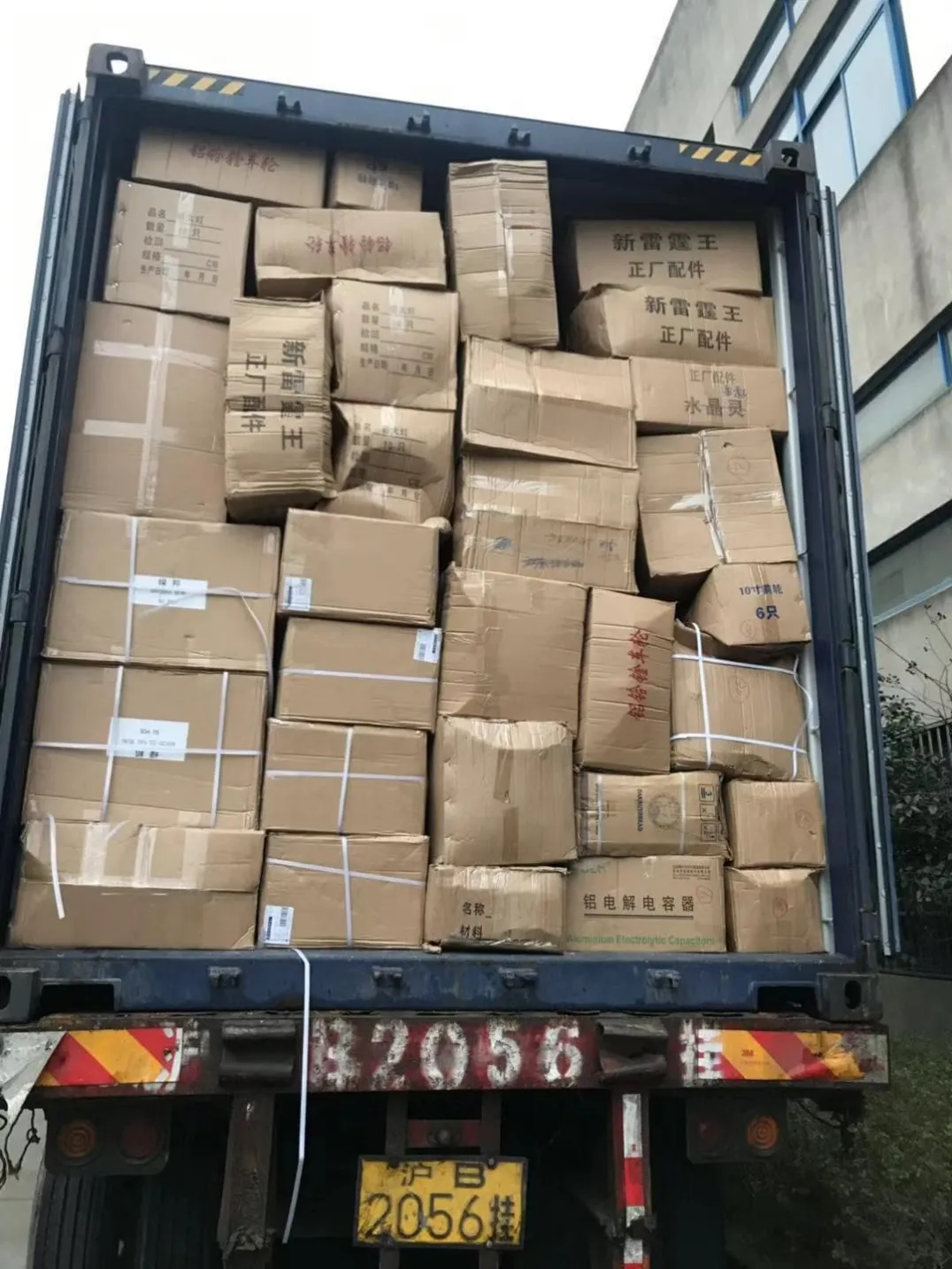
The cheapest freight quote is not the cheapest landed cost
Two importers can buy the same electric scooter and pay very different amounts to get it selling in their market. The difference is rarely the unit price. It is how the vehicles travel — fully assembled, semi-knocked-down (SKD) or completely-knocked-down (CKD) — and how they are packed for the journey.
It helps to be precise about what "landed cost" actually includes, because each shipping form moves cost from one line of your budget to another rather than removing it. Landed cost is the unit price plus international freight, plus port and customs charges and any duty that applies to the form in which the vehicles arrive, plus local transport and warehousing, plus the labour, tools, and time needed to get each vehicle assembled, tested, and ready to sell, plus the cost of repairing or replacing anything damaged on the way. A fully assembled scooter shifts almost all of the assembly cost to the factory and the freight line: you pay more per unit to move it, and less to prepare it. A CKD kit does the opposite: freight per unit falls, but assembly, testing, fault-finding, and spare-parts holding become your costs, in your workshop, with your staff. Neither is automatically cheaper. The only honest comparison is a total, per sellable vehicle, in your market.
Do that comparison as a simple worked exercise with your own numbers before you choose. Take one model and one quantity, and build three columns — assembled, SKD, and CKD. In each column, write the unit price for that form, the freight divided by the number of units that form puts in the container, your expected duty and clearance cost for that form, the local labour and consumables per unit, the warehouse space it will occupy, and an allowance for damage and missing parts based on your own experience. Then divide by the number of vehicles you expect to actually sell from the shipment, not merely the number you loaded. Buyers are often surprised by the result: the form with the highest freight can win for a small first order with no workshop, while the form with the lowest freight can lose money for a buyer who has to hire, train, and equip an assembly team for a quantity too small to keep that team busy. The exercise takes an hour. Choosing the wrong form costs a season.
Two warnings belong with that exercise. First, do not assume a duty advantage for any form in your market. The original point stands: CKD may receive a different duty treatment in some markets — but "some markets" is not your market, and duty treatment depends on your own customs rules and how the goods are classified on arrival. Confirm the treatment for each form in writing with your customs broker before you order, and keep that advice with the order file. Second, do not compare quotations from different suppliers until you are sure each quote describes the same form, the same kit contents, and the same packing standard. A cheaper CKD quote that excludes items another supplier includes is not the same product.
CKD, SKD or assembled: what actually changes
- Fully assembled. Fastest to sell on arrival, but each unit takes the most container space, so freight per unit is highest. Best when you have no local assembly capacity and need stock quickly.
- SKD. Some parts fitted at the factory, the rest fitted locally. A middle ground on freight and on local work — but only if the split between factory and local work is written down, part by part.
- CKD. Vehicles shipped as parts kits for local assembly. Lowest freight per unit and, in some markets, a different duty treatment — but it only works if you have the workshop, tools, trained staff and spare parts to assemble, test and support the vehicles yourself.
None of these is right for every market. The right choice depends on your local labour cost, import duties, warehouse space and after-sales capacity — not on what is easiest for the factory to ship.
Expand each option into the questions a buyer should actually answer.
Fully assembled suits a first order, a market test, or a dealer who sells from a showroom and has no workshop beyond routine servicing. Your checks are about readiness and damage: will the vehicles arrive ready to charge, test, and display, what preparation is still needed on arrival, and how are assembled vehicles protected when they cannot be boxed as compactly as kits? Your selling time is shortest, but your exposure is concentrated in freight cost and in transit damage to finished, visible surfaces — a scratched assembled scooter is a retail problem, not a workshop problem.
SKD suits a buyer with some local capacity who wants part of the work done locally without taking on full assembly. Its risk is ambiguity. "Some parts fitted" means nothing until it is a list. Confirm in writing, part by part, what the factory fits, what you fit, what tools and torque or adjustment work the local steps require, what parts and fasteners are included for those steps, and who is responsible if a locally fitted part fails. Also confirm how the part-fitted units are packed, because an SKD unit can be an awkward shape — neither a flat kit nor a finished vehicle — and awkward shapes waste container space and damage easily if the packing was designed for a different form.
CKD suits an importer building a local operation: a workshop, trained staff, a parts stock, and enough volume to keep assembly running steadily. Its risks are completeness and capability. A kit is only useful if every part, fastener, and charger matched to the battery configuration is in it, labelled, and accounted for on a carton-by-carton packing list. Before a first CKD order, confirm in writing what is included in each kit, what is deliberately not included, what you must source locally, what assembly instructions and training support the factory provides, and what spare parts you should hold for assembly faults and early after-sales. Then start with a sample kit and assemble it in your own workshop, timed, by the staff who will do the production work. That single test tells you more about your true CKD cost than any quotation: how long one unit really takes, which step causes trouble, what tool you are missing, and whether the instructions are clear to someone who was not on your buying trip.
A practical decision rule follows from all three: choose the most assembled form you can afford for a first, small order while you learn the product, and move toward SKD or CKD only when your volume, workshop, and parts system have proved themselves on real arrivals. Reversing that order — starting with the least assembled form to chase the lowest freight — is one of the most common and most expensive mistakes new importers make.
Packing: the damage you only discover at the port
Sea freight is hard on electric two-wheelers: humidity, salt air, stacking pressure and rough handling at transhipment. The most common arrival problems are scratched body panels, bent handlebars and mirrors, water ingress and dead-on-arrival batteries — most of which are packing problems, not product problems.
Before shipment, ask for:
- Photos of the actual packing — not a stock photo — including how batteries are protected inside the carton or crate
- Photos of the loading itself, showing how units are stacked and secured in the container
- A written packing list, carton by carton, so you can check the delivery against it on arrival
- Agreement in writing on who is responsible if units arrive damaged, and what evidence (photos at unloading, before moving the goods) is needed to claim
Lubon Motor provides loading photos with shipments — ask for them before the container leaves, not after a problem appears.
Read those photos like an inspector, not like a customer admiring a shipment. In the packing photos, look for protection on the parts that actually get damaged: are painted and plastic panels separated from hard or sharp parts, are handlebars and mirrors positioned and protected so they cannot bend or snap under stacking, are loose parts secured inside the carton rather than free to move, and are the batteries protected inside the carton or crate in a way you can clearly see? In the loading photos, look at how units are stacked and secured: is weight carried by the packing rather than by the vehicles, is the load braced so it cannot shift in a rough sea leg, and is the container filled in a way that does not crush the cartons at the bottom? If a photo is too distant or too dark to judge any of this, ask for a closer one before loading is finished. The time to discover weak packing is while the container doors are still open at the factory.
Also agree the packing standard in words, not only in pictures. Confirm in writing the packing method for your chosen form, what protection is used for panels, mirrors, and batteries, how cartons or crates are marked, and how the marks correspond to the packing list. Marking sounds trivial until a CKD shipment arrives and your team cannot tell which cartons belong together, or a warranty and damage discussion starts and nobody can identify which carton a damaged part came from. Where warranty or damage responsibility is concerned, confirm the terms in writing — what is covered, what evidence is required, and within what process a claim is made — rather than assuming a period or a procedure that was never agreed.
One more packing question is worth asking before, not after, shipment: what happens at your end? Cartons and crates have to be unloaded, stored, and opened somewhere. Confirm the carton or crate dimensions and weights in writing so you can plan warehouse space, handling equipment, and how many people unloading will take. A shipment that was cheap to load can be expensive to receive if it arrives in units your team cannot move or store safely.
Your arrival checklist
- Photograph the container seal and the cartons before unloading.
- Count cartons against the packing list before signing the delivery note.
- Open a sample of cartons and check panels, handlebars, mirrors, tyres and battery connectors.
- Power up a sample of vehicles and record any that do not start, with photos and video.
- Report damage the same day, in writing, with the photos — waiting a week weakens any claim.
Run that checklist as a discipline, with one person responsible for it and a simple form to fill in. Photograph the seal before it is broken, and photograph the load as the doors open, before anything is moved — that first view is evidence you can never recreate. Count before you sign, and note shortages or visibly damaged cartons on the delivery paperwork at the time, not from memory later. When you open your sample, choose cartons from different positions in the container, not only the easiest ones at the door; damage from stacking and water tends to show at the bottom and at the sides. For CKD and SKD arrivals, add one step the original checklist implies: assemble or part-assemble one complete kit early, before you distribute kits to dealers or other workshops, so a missing or damaged component is discovered while the full shipment — and your evidence — is still together. For assembled arrivals, charge and power up your sample promptly and record the results unit by unit. Keep every photo and note in one shipment file. If you later need to claim, that file is the claim; if you do not need to claim, it is still your best record for judging whether the same packing standard is acceptable on the next order.
Common mistakes at this stage are waiting to inspect until the goods have been moved and mixed with existing stock, signing a clean delivery note before counting, and reporting damage by phone without photos. Each one weakens your position and makes a fair discussion with the supplier harder. Same-day, written, photographed reporting protects both sides, because it separates transit damage from damage that happens in your own warehouse.
Ask before you order
Confirm in writing: the shipping form (assembled / SKD / CKD), what is included in each kit, the CKD lead time, and what packing and loading photos you will receive. On the Lubon LB-CS, the listed CKD lead time is 15 days — confirm the form and the lead time for your exact configuration and quantity before you place the order, and test a sample first if you are assembling locally for the first time.
To that core list, add the confirmations this guide has built up, all in writing: the duty and classification advice for your chosen form from your own customs broker; the part-by-part split of work if you choose SKD; the complete kit contents and exclusions if you choose CKD; the assembly instructions and support the factory will provide; the packing method, carton or crate dimensions and weights, and carton marking system; the packing and loading photos you will receive and when you will receive them; and the damage-responsibility and evidence agreement. Also remember that Lubon's two-wheelers are produced at its Wuxi base, for a company based in Jiangxi — if you discuss collection, loading, or a factory visit as part of your order, confirm the exact arrangements for your shipment in writing rather than assuming them from a company description.
If two quotations still look equal after all of that, let the sample decide. Order the form you intend to buy, in sample quantity, packed the way the main shipment will be packed, and run the full arrival checklist on it. The sample's freight will not be the cheapest way to buy one scooter — but it is the cheapest way to learn your real landed cost.
Planning an electric two-wheeler order? Tell us your market, your assembly capacity and your port, and we will confirm the shipping form and packing with your quotation. Email: saravehicle@jxlubon.com · WhatsApp: +86 189 7035 3905
You can reach Lubon Motor at saravehicle@jxlubon.com or on WhatsApp at +86 189 7035 3905. In that first message, include your destination port, the quantity you are considering, whether you have a workshop and assembly staff, and which form — assembled, SKD, or CKD — you are leaning towards, and ask for the kit contents, lead time, and packing and loading photo arrangements for that form to be confirmed in writing with the quotation.