
Electric Scooters in the Rainy Season: The Checks African Dealers Should Run Before the Rains
Rain finds every weak seal and every worn tyre. The pre-season checks — tyres, brakes, electrics and charging — dealers should run before the rains arrive.
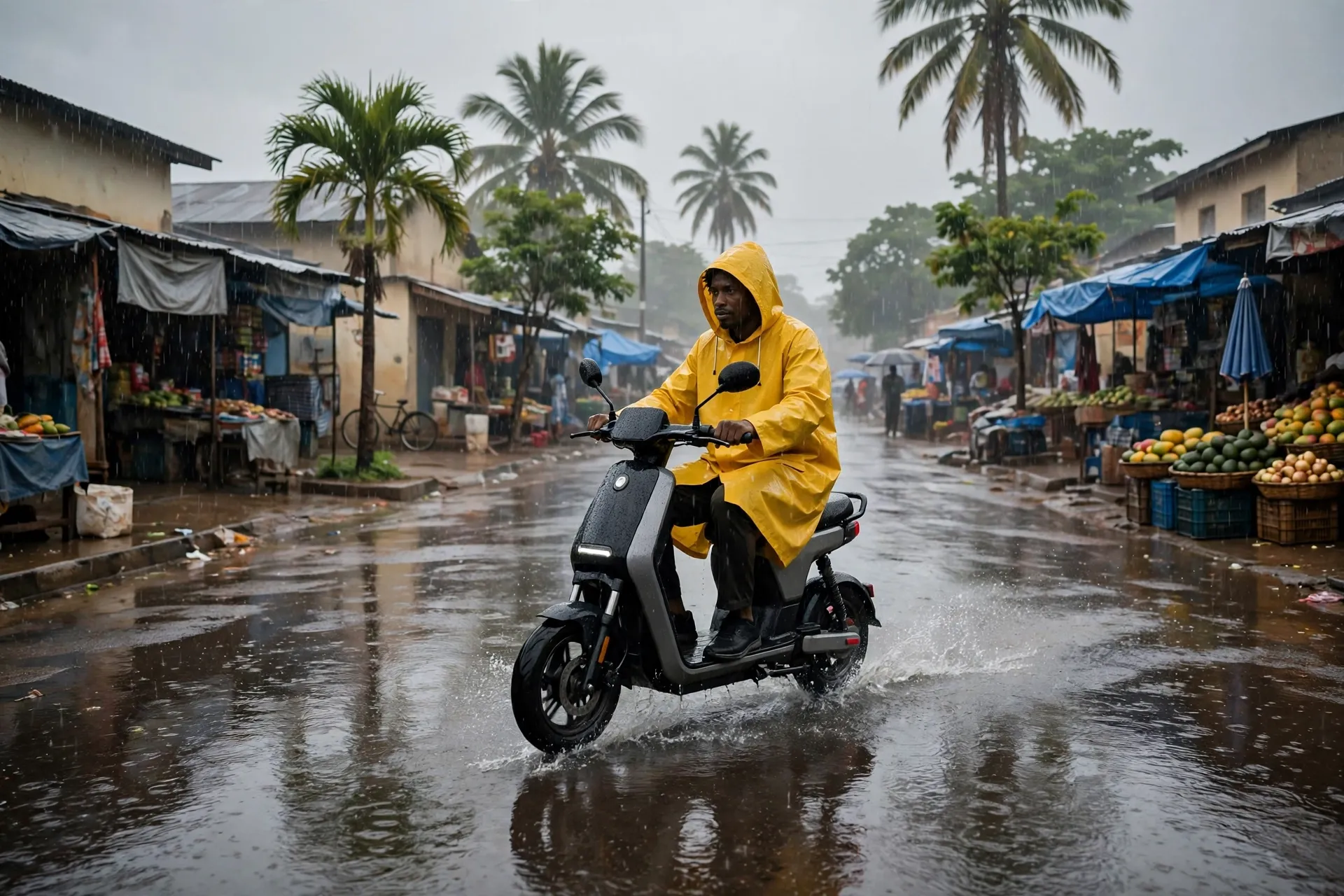
Rain is a test the scooter cannot avoid
A scooter that rides well in the dry season can disappoint badly in the rain, and the disappointment shows up in the places a dealer rarely looks during a showroom test: the tyres, the brakes, the electrical connectors, and the place where the scooter charges. In many African markets the rainy season is not a light shower. It is months of heavy downpours, flooded streets, mud, and roads that change from dust to deep ruts in a single storm. A scooter that copes with that is a scooter a customer will trust all year. A scooter that does not will be remembered for one bad week. For a dealer, the rainy season is also a selling season — if the scooters are ready for it. Customers buy when they need transport that works in the rain, and they ask their neighbours which scooter kept going. Run the checks before the rains arrive, fix what needs fixing on the sample, and tell your customers what you checked. A dealer who can talk honestly about rain is a dealer a customer trusts in the dry season too.
Tyres and brakes: the two things that decide a wet road
On a wet road, the tyre is the whole difference between stopping and sliding. Check the tyre tread on the sample the way your customers will use it: on wet tarmac, on mud, and on the rutted dirt roads that turn slick in the first rain. A tyre that grips well when dry can still slide when the road is wet, so test it wet, not just dry. Ask the factory, in writing, for the exact tyre size for your model, and check whether that size is available from local suppliers or on the factory's spare-parts list. A worn tyre is the most common rainy-season failure, and it is also the most avoidable — order the tyres before the season, not after the first crash. Brakes matter even more in the rain, because stopping distances grow and the brakes themselves get wet. Test both brakes on a wet road with a passenger on board, and note whether they bite promptly or need a long pull before they work. Check the brake pads, cables and discs for wear before the season, and tell your customers how often to check them. Water and mud wear brake parts faster than dry dust does, so a brake that lasts months in the dry season may need attention much sooner in the wet one. Keep brake parts in stock before the rains, because a rider who cannot brake properly in the rain will not ride at all — and will blame the scooter, not the weather.
Electrics, connectors and the battery
Rain finds every weak electrical connection. Water gets into connectors, switches and lights, and the problems it causes often look like something else: a light that flickers, a throttle that cuts out, a scooter that will not start after a storm. Before the season, check the sample's connectors, switches and lights after riding in heavy rain, and note anything that misbehaves. Ask the factory, in writing, which electrical parts are on the spare-parts list, and keep the small parts — bulbs, switches, cables and connectors — in stock, because they are the parts a wet season consumes fastest. The battery needs the same care. Lubon models offer lithium-ion and lead-acid options in 60V/72V 32Ah, and the battery on the listed configuration sits under the seat as a black rectangular metal box. Keep it dry, keep its connectors clean, and never charge a scooter that is standing in water or with a wet charger. After a ride in heavy rain, let the scooter dry before plugging it in, and keep the charger itself dry and out of the rain. If a charger has been soaked, do not use it until it has dried fully and been checked. Confirm in writing, for your exact battery, how it should be handled after exposure to rain, and follow the battery maker's sheet rather than a general rule from the internet. Do not quote a water or dust protection rating for any model unless the factory has given it to you in writing for that exact model.
Charging in the wet season
Charging is where the rainy season causes the most avoidable damage, because a charger left in the rain or plugged in with wet hands is a risk to the charger, the battery and the rider. Charge under cover, on dry ground, and keep the charger out of puddles and out of direct rain. Give the charger air around it rather than wrapping it in plastic that traps heat and moisture, and keep it dry. If the charging point is outdoors, make sure it is sheltered and that the plug and socket stay dry. After a ride in heavy rain, wipe the charging port dry before plugging in, and let the battery cool before charging, just as in hot weather. Watch the charger as well as the battery. A charger that becomes too hot to touch, that smells, or that cuts out part-way through a charge is telling you something. Note what happens, photograph the charger label, and report it to the factory with the battery details. Do not keep using a charger that misbehaves. And always confirm, in writing, the charger that goes with your battery: the input voltage range it is built for, the plug type for your country, and whether it matches the exact battery chemistry on your order. Lubon models on the listed configuration charge in 4–6 hours, so plan the charging window around the rider's day, and confirm the charger against the exact configuration before shipment.
Riding, parking and the sample test
A scooter that works in the rain is a scooter that has been tested in the rain. Before the season, take the sample out in heavy rain on your customers' real routes — flooded streets, muddy tracks, rutted roads — and write down what you see. Note whether water splashes onto the rider's feet, whether the footrests stay usable when wet, whether the seat sheds water or holds a puddle, and whether the lights stay visible in spray. Ride it with a passenger on board, because a scooter that handles well with one person can feel very different with two on a wet, rutted road. Keep the sample for long enough to see a pattern: a single ride in light rain proves very little, while a week of daily rides in real storms will show you what needs attention. Parking matters too. A scooter parked in the open all day in the rain is a scooter whose seat, connectors and brakes are soaked before every ride. Tell your customers to park under cover where they can, and to wipe the seat and the charging port dry before riding and charging. Where cover is scarce, a light rain cover helps, but it must be removed before charging so the charger has air. These are small habits, and they are the habits that keep a scooter earning through the season.
What to get in writing before the rains
Before the season arrives, put the rainy-season answers in writing, both for your own shop and for the factory.
- The exact tyre size for your model, and whether it is on the factory's spare-parts list and available locally.
- The written spare-parts list, with prices, for the parts a wet season wears fastest: tyres, brake parts, bulbs, switches, cables and connectors.
- The battery and charger handling guidance for your exact battery after exposure to rain, from the battery maker's sheet.
- The charger for your battery chemistry, with the input voltage range and plug type for your country, confirmed in writing.
- The delivery terms for your order — Lubon offers CKD supply with a 15-day lead time on the listed configuration, and samples are available before a main order, so confirm the exact terms for your quantity in writing.
- What to do, step by step, if a scooter misbehaves after heavy rain — who to contact, what evidence to send, and what the factory will do.
A scooter that keeps its grip, keeps its brakes, keeps its lights on and charges safely in the rain is a scooter a customer will ride all year and recommend to every neighbour. Test the sample in real rain, stock the parts the wet season wears first, and get the answers in writing before the rains arrive. That is how a dealer turns the hardest season into the best selling season.
Talk to our team
Tell us how wet your season gets and which roads your riders use in the rain, and we will confirm the configuration, spare-parts list and delivery terms for your market in writing before you order: contact us.