
How African Dealers Choose the Right Electric Scooter for Their Market
The best scooter for your market is the one your roads, your riders and your workshop can live with — not the one with the biggest numbers.
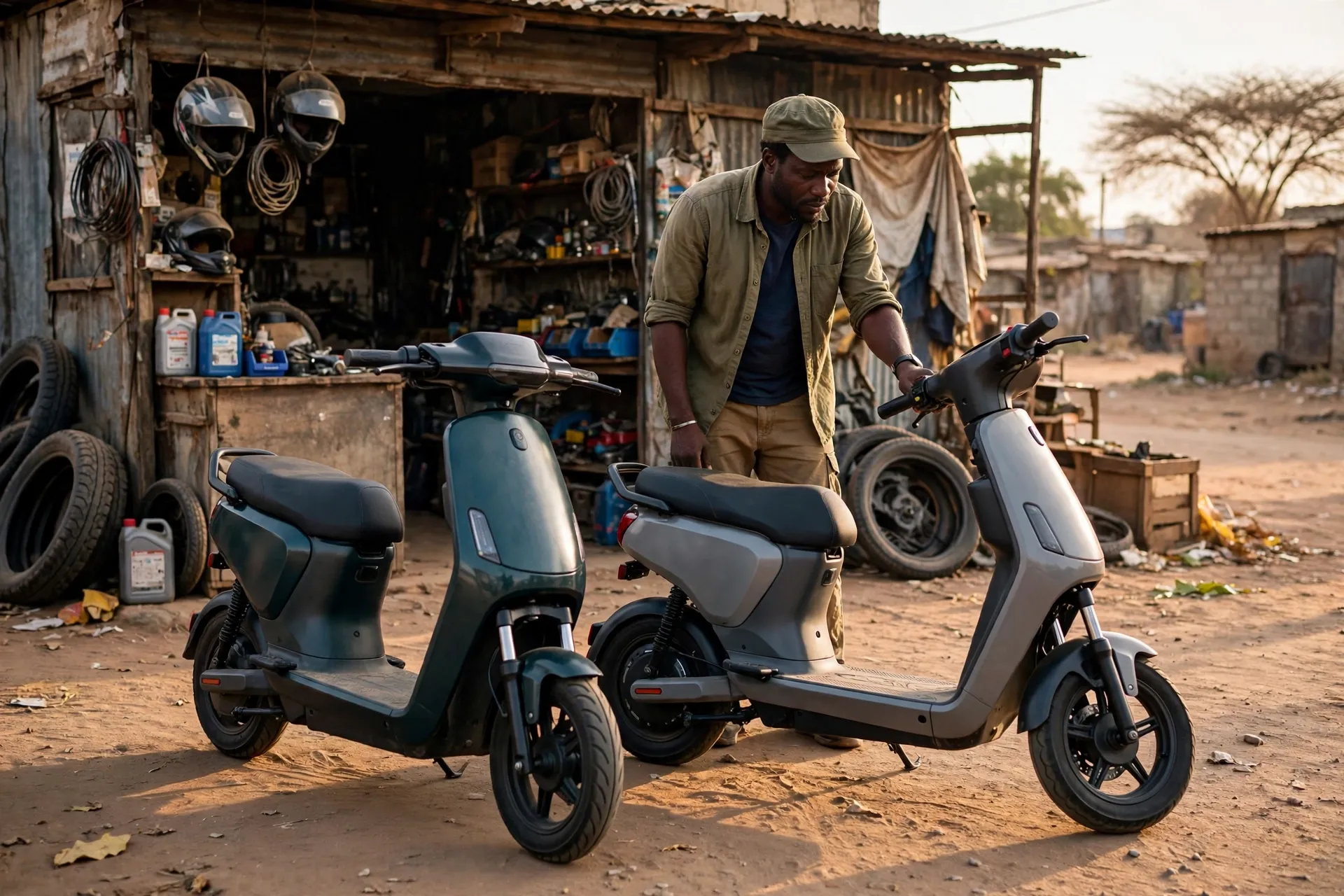
Start from the road, not the catalogue
A dealer choosing a model usually starts with the catalogue: motor power, battery size, top speed. The dealers who choose well start somewhere else — with the road outside their shop, the rider who will use the scooter, and the workshop that will keep it running. A scooter that suits a smooth city street can struggle on a dirt road with potholes, and a scooter built for short city trips can disappoint a rider who carries passengers all day. The right model is the one that fits your market, and the only way to find it is to test it there.
This article sets out how to choose. It uses only the figures Lubon confirms for its listed configuration — a 1500W motor, lithium-ion or lead-acid 60V/72V 32Ah battery, a maximum speed of 45 km/h and a charging time of 4–6 hours — and it does not quote load, climbing or range figures, because those depend on the road, the rider and the load, and must be confirmed in writing for your model and your conditions before you order.
Know your rider first
Before you compare models, write down who will ride the scooter and what a normal day looks like for them. A commuter riding a few kilometres on paved roads needs something different from a motorcycle-taxi rider carrying passengers all day on rough roads, and different again from a delivery rider stopping and starting all day with goods on board. Ask your customers, or the dealers you already know, how far they ride in a day, what roads they use, how many passengers or how much load they carry, and where they charge.
That picture decides the questions to ask the factory. A rider who works all day needs a scooter that is easy to charge between jobs and easy to repair when it wears. A rider on rough roads needs strong wheels, good tyres and a frame that takes the knocks. A rider who carries passengers needs brakes and a seat that cope with the extra weight day after day. None of this is decided by the catalogue alone — it is decided by the sample, ridden on your roads, by the people who will actually use it.
The motor, the battery and the speed — what the numbers mean
The listed Lubon configuration uses a 1500W motor, a 60V/72V 32Ah battery in lithium-ion or lead-acid, and a maximum speed of 45 km/h. Those are the factory's confirmed figures for the listed configuration, and they are the right starting point for a comparison — but compare them honestly. A motor figure on its own does not say how a scooter climbs a hill with a passenger, and a battery figure on its own does not say how far a scooter goes on your roads, because speed, load, road surface and temperature all change the result. Ask the factory, in writing, what the figures mean for your model and your conditions, and do not accept a range or climbing figure that has not been confirmed for your exact model.
Battery chemistry matters for your market. Lithium-ion and lead-acid behave differently on cost, weight, charging and care, and the right choice depends on your customers' budget, your charging conditions and the parts you can supply. Ask the factory for the written differences for your model — the charging time, the care the battery needs, and how a charger for one chemistry must not be used on the other, even when the voltage number looks the same. The listed configuration charges in 4–6 hours, and the battery sits under the seat as a black rectangular metal box. Teach your customers the basics at handover: charge under cover on dry ground, let the battery cool before charging, and keep the connectors clean and dry.
Speed matters too, but not in the way a catalogue suggests. A maximum of 45 km/h suits most city and town work, and it keeps the scooter in the class of vehicle your customers can use without the licensing of a faster machine in many markets — confirm the rules for your own country through your own channels, and do not assume one market's rules apply in another. What matters more than the top speed is how the scooter behaves at the speed your riders actually use: smooth throttle, brakes that stop it with a passenger on board, and lights that work at night. Test those on the sample, not on paper.
Test the sample on your own roads
Samples are available before a main order, and the sample test is the most important step in choosing a model. Order the sample and ride it where your customers ride. Take it over the rough road, the pothole, the dirt track and the hill your customers use every day. Ride it with a passenger if your customers carry passengers. Charge it on your own power, in your own conditions, and time it. Take it to your workshop, take the wheels off, check the brakes, the controller and the battery connections, and see whether your technician can work on it with the tools you have.
Write down everything you find: what felt strong, what rattled, what was hard to reach, what your technician asked about. Photograph anything that worries you and send it to the factory with your questions. A factory that answers clearly, in writing, is a factory you can work with; a factory that will not answer is telling you something too. Confirm the exact terms for your quantity in writing before the main order, and get the kit contents, manual and training offer in writing as well — Lubon offers CKD supply with a 15-day lead time on the listed configuration, and loading photos are provided before shipment.
Parts, service and the model you can support
The best scooter in the catalogue is no good if you cannot repair it. Before you choose a model, check that you can support it. Ask the factory for the written spare-parts list for your exact model, with prices, and check that the fast-wearing parts — tyres, brake pads, cables, lights, switches and connectors — are parts you can stock and fit. Lubon keeps spare parts in their own Spare Parts category. Ask whether the charger, controller and throttle for your model are available as spares, and confirm in writing that they match the exact model and battery configuration.
Choose a model your workshop can live with. If you sell two models that share parts, your stock is simpler and your technician learns faster. If you sell five models with nothing in common, your shelves are five times as complicated. Ask the factory which parts are shared between the models you are considering, and let that answer weigh in the choice. A model that shares its brakes, tyres and controller with the model you already sell is worth more than a model with a bigger number on the catalogue page.
What to get in writing before you choose
Choosing a model is a decision to live with for years, through every repair and every repeat sale. Before you commit, put these in writing.
- Who rides the scooter, how far, on which roads, with what load — your own market picture, written down.
- The confirmed figures for your exact model — 1500W motor, 60V/72V 32Ah battery, 45 km/h maximum, 4–6 hours charging — and what they mean for your roads and your riders, confirmed by the factory.
- The battery chemistry for your market, and the charging and care instructions in writing.
- The sample ridden on your own roads, with a passenger where your customers carry one, and your technician's report on working on it.
- The spare-parts list for your exact model, with prices, and which parts are shared with the models you already sell.
- The workshop tool list, and the training offer from the factory, with dates.
- The delivery terms — Lubon offers CKD supply with a 15-day lead time on the listed configuration, and samples are available — confirmed for your exact quantity.
- What to do, step by step, if a part fails early or a scooter arrives damaged — who to contact, what evidence to send, and what the factory will do.
The right model is not the one with the biggest numbers. It is the one your roads can carry, your riders can afford to run, and your workshop can keep on the road for years. Choose it on the sample, on your own roads, with the parts list in your hand — and the scooter you choose will sell the second one for you.
Talk to our team
Tell us your roads, your riders and the model you are considering, and we will confirm the specification, spare-parts list and delivery terms for your order in writing before you order: contact us.