
Why Electric Scooters Arrive With the Wrong Charger — And How to Prevent It
A wrong plug or a mismatched charger can ground a whole shipment. The pre-shipment charger checklist for electric scooter importers.

A small box that can stop a whole container
The charger is one of the cheapest items in an electric scooter shipment — and one of the most common reasons a container of good vehicles cannot be sold on arrival. If the plug does not fit local sockets, or the charger does not match the battery, your customers are stuck on day one.
That is what makes this mistake so frustrating for importers. The scooters themselves may be exactly what you ordered. The motors may run, the body panels may be undamaged, and the paperwork may be in order. Yet none of that matters to a first customer who takes a scooter home, tries to charge it that evening, and finds that the plug will not go into the wall, or that the charger in the carton belongs to a different battery system. The vehicle is not broken in a dramatic way. It is simply unusable until the right charger arrives — and a replacement sent by air or in the next container can take far longer than the customer is willing to wait.
Think about where the cost lands. It is rarely just the price of one charger. It is the dealer who cannot demonstrate the scooter, the delivery rider who loses working days, the shop that has to store vehicles it cannot hand over, and the importer who has to answer the same question again and again: why was something this basic not checked before shipment? A charger problem also creates a safety risk of its own, because customers who cannot use the correct charger will improvise. They cut plugs, force adapters, borrow a charger from a different scooter, or ask a local electrician to modify equipment that should never have needed modifying. Prevention is not paperwork for its own sake. It is how you stop a small, cheap component from creating returns, complaints, and unsafe workarounds.
The most common reason it happens is also the simplest: the charger was treated as an accessory instead of as part of the vehicle specification. In many orders the scooter model, colour, motor, and battery are discussed in detail, while the charger is covered by one vague line such as "standard charger" or "charger included." Standard for whom? Standard in the factory's domestic market is not necessarily standard in yours. Standard for a lead-acid version of a scooter is not standard for the lithium version of the same scooter. If nobody writes down the market, the plug, the input, and the battery it must match, the factory will fill the gap with its usual stock — and its usual stock may be wrong for you.
Build the habit early: on every order, treat the charger with the same seriousness as the battery. Name it, photograph it, and confirm it in writing before production, not when the container is already being loaded.
Three things must match — not one
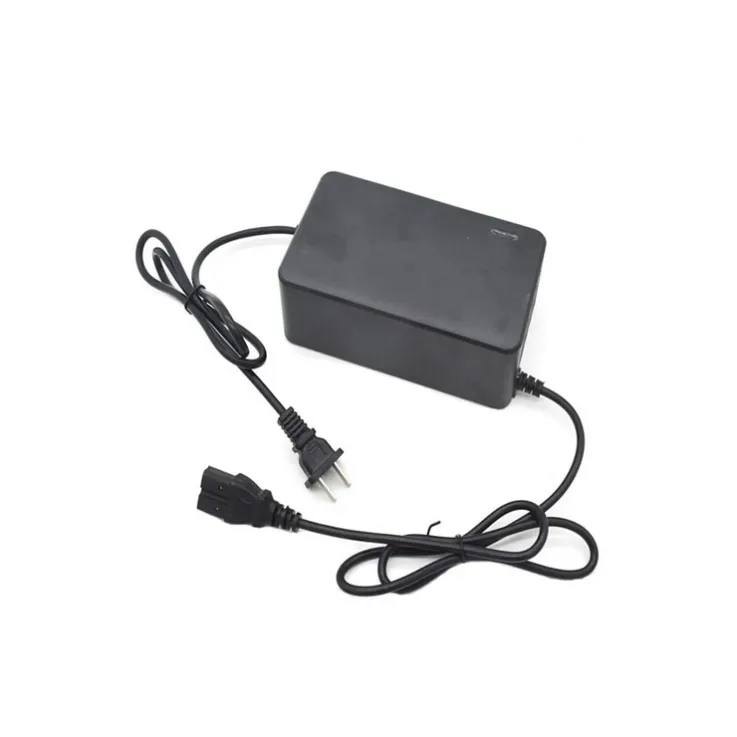
- The plug. Socket shapes differ across Africa, the Middle East, South Asia and Latin America. "We will add an adapter" is not a professional answer for a retail product.
- The input voltage and frequency. Confirm the charger's rated input range against your local grid, including how stable that grid is.
- The charging profile. A charger built for lead-acid and one built for lithium are not interchangeable, even at the same nominal voltage. A 60V lead-acid charger on a 60V lithium pack is a safety and warranty problem, not a shortcut.
Take each of the three in turn, because each fails in a different way.
First, the plug is a physical and a commercial check. Do not rely on a country name alone. Within one market there can be older and newer socket types in homes, shops, and charging points, and the socket your retail customers use at home may not be the one in your own warehouse. The practical check is simple and concrete: send your supplier a clear photo of the socket your customers will actually use, with the plug type named in writing, and ask for a photo back of the actual plug that will be fitted to your chargers. Compare the two photos side by side before you approve anything. If you sell in more than one country, repeat the check for each country separately — do not assume one plug covers a whole region. Also decide in writing what happens with spare chargers and replacement chargers later: they must carry the same plug, or your own spare-parts stock will quietly create the same problem a year from now.
An adapter is not the same answer. An adapter can be lost, it can fit loosely, and it puts an extra connection between the wall and the charger that the customer has to trust every single night. For a sample you are testing in your own workshop, an adapter may be a temporary practical step. For a retail product that a customer will charge at home, the charger should arrive with the correct plug fitted from the factory. Put that expectation in the order, in plain words.
Second, the input side must match your grid — including when the grid is not stable. Read the charger label, not just the brochure. The label should state the rated input voltage range and frequency the charger is built for. Confirm those figures against the supply in your market, in writing, and tell your supplier honestly how stable that supply is. If voltage in your area regularly rises and falls, if customers charge from generators, or if charging happens in workshops and depots rather than only in new houses, say so before quotation. That conversation does not guarantee a particular charger will suit every condition — you should confirm the exact charger model and its rated input in writing for your conditions — but it stops the supplier from assuming a clean, stable supply you do not have. A common mistake is to confirm only the nominal voltage for the country and stop there. Nominal is the headline number. What matters for a buying decision is the rated input range printed for the specific charger you will receive, matched against the real conditions your customers will charge in.
Third, the charging profile must match the battery chemistry and the exact battery configuration. This is the point buyers most often miss, because two chargers can look identical, carry the same nominal voltage in their description, and still be wrong for each other. A charger built for lead-acid and one built for lithium are not interchangeable, even at the same nominal voltage. The charging stages, the finishing behaviour, and how the charger interacts with the battery's own protection are different jobs. Using the wrong one is not a clever shortcut to save a few units of currency — it is, as the original warning puts it, a safety and warranty problem. Where warranty is concerned, do not assume any period or coverage: no warranty period is something you should take for granted, so confirm the terms in writing for the charger and the battery together.
The same discipline applies when you change anything else in the order. If you switch a model from lead-acid to lithium, change the battery voltage, or order two versions of the same scooter with different batteries in one shipment, the charger check has to be repeated for each version — and the cartons have to be marked so clearly that your own warehouse team cannot mix them up on arrival. A mixed shipment is where charger mistakes multiply: the scooters look alike, the chargers look alike, and the first time anyone notices is when a customer calls. Ask, in writing, how chargers for different configurations will be labelled and packed, and check that labelling in the pre-shipment photos.
A useful decision rule for buyers is this: if any one of the three — plug, input, or profile — is unconfirmed, the charger is unconfirmed. Do not let a "yes" on the plug stand in for a "yes" on the other two.
Put it in writing before production
- Charger model and rated input/output, written on the order — not just "standard charger"
- A photo of the actual plug for your market, confirmed before mass production
- Spare chargers included per shipment, agreed in advance, so one damaged charger does not ground a vehicle
- A photo of the charger label in the pre-shipment / loading photos your supplier sends you
Use that short list as the core of a longer, order-ready checklist. Before production starts, confirm in writing:
- The exact charger model for this order, and the battery configuration it is matched to — chemistry, nominal voltage, and capacity — recorded in the same document as the battery specification itself.
- The rated input voltage range and frequency printed for that charger, and the plug type fitted, with a photo of the actual plug approved by you.
- How many chargers are included per vehicle, how many spare chargers are included per shipment, and how spares are packed and labelled.
- How chargers are labelled where one shipment contains more than one battery configuration, so the right charger reaches the right scooter.
- A photo of the charger label — not a catalogue image — to be included in the pre-shipment and loading photos, clear enough that you can read the model and the rated input/output.
- What happens if a charger arrives damaged or faulty: the evidence you need to provide, and the replacement route. Confirm any warranty terms in writing at this stage rather than assuming them.
Then add two practical checks of your own at the sample stage, because a sample is where this problem is cheapest to catch. When your sample scooter arrives, charge it yourself, from your own socket, with the charger in its carton — do not let the test be done for you with workshop equipment. Photograph the plug, the label, and the scooter charging in your premises, and keep those photos with the order file. If the sample charger is correct, state in writing that mass production must match the sample charger exactly, and that any change of charger model needs your written approval first. If the sample charger is wrong, you have found the problem at the cost of one unit, not a container.
There is also a timing lesson here. Charger confirmation belongs at the quotation and order stage, not in the final week before loading. A factory asked to change plugs or charger models at the last minute may have to source different stock under time pressure, and rushed substitutions are exactly how a correct order becomes a wrong shipment. Locking the specification early protects the supplier as well as you.
On the Lubon Motor LB-CS, listed charging time is 4–6 hours for its listed configuration — but the right charger depends on the final battery configuration you confirm. That model is listed with lithium and lead-acid battery options at 60V/72V, 32Ah, which is precisely why the charger cannot be left as a generic line: the option you choose changes what "the right charger" means. Always lock the charger specification together with the battery specification, in the same document, before shipment. If you are comparing quotations from several suppliers, compare this point too — a slightly cheaper quote that leaves the charger vague is not cheaper once a container of vehicles is waiting for replacement chargers.
Finally, brief your own team. The person receiving the container should know which plug and which charger label to expect, should open a sample carton and check a charger against the approved photo on arrival day, and should report a mismatch the same day, in writing, with photos. A mismatch found at unloading can still be solved. A mismatch found after the scooters have been distributed to dealers is a much harder problem.
Ordering electric scooters? Send us your market's plug type and voltage with your inquiry, and we will confirm the matching charger before quotation. Email: saravehicle@jxlubon.com · WhatsApp: +86 189 7035 3905
You can reach Lubon Motor at saravehicle@jxlubon.com or on WhatsApp at +86 189 7035 3905. In that first message, include the three things this guide has covered — your market and plug type, your local voltage and how stable your supply is, and the battery configuration you are considering — and ask for the matching charger model, its rated input and output, and a photo of its plug and label to be confirmed in writing before production.