
Why Your Electric Motorcycle's Real Range Is Much Less Than Advertised — And How Importers Can Check It Before Ordering
Advertised range is often tested at low speed with a light rider. Learn how importers and distributors can verify real range, battery capacity and test conditions before placing a two-wheeler order.

The complaint every distributor hears
"The brochure said 100 km. My customers only get 65 km."
This is the most common after-sales complaint in the electric two-wheeler business — and it usually is not because the battery is fake. It is because the advertised range and the real-world range were measured in completely different ways. If you import or distribute electric motorcycles and scooters, checking range correctly before you order protects your reputation far more than any brochure.
Understand where this complaint actually lands. It does not arrive at the factory. It arrives at your shop, in front of other customers. The rider does not think, "the test conditions were different." The rider thinks, "this dealer sold me a bike that does not do what was promised." From there, the cost spreads quickly: your staff spend hours re-testing a healthy vehicle, the customer demands a replacement battery or a discount, and other buyers hear the story before they hear yours. If you sell to delivery riders, taxi riders or small fleets, the damage is worse, because for those customers range is not comfort — it is income. A vehicle that stops early is a vehicle that earns less that day.
That is why range checking belongs in your buying process, not in your after-sales department. By the time a container has arrived, every range problem has already been paid for. The checks in this article cost almost nothing. Most of them happen before you order, and the most important one — a sample test you control — happens before you commit to volume.
Why advertised range is almost always higher
Most factory range figures are tested under ideal conditions:
- Low, constant speed — often 25–30 km/h, while your customers ride at 45–60 km/h. Energy use rises sharply with speed. A test run at one steady, gentle speed tells you very little about stop-and-go city traffic, where the vehicle accelerates from rest again and again, or about faster open-road riding, where pushing through the air takes a growing share of the battery's energy.
- One light rider, no cargo — while delivery and commuting use often means a passenger or a loaded box. Every extra load asks the motor to work harder on every start and every slope, and that work comes out of the same battery.
- Flat road, mild weather — hills, headwinds and cold weather all cut real range. A test route chosen by the seller is rarely the route your customers ride. Your market may have steep streets, rough surfaces, strong seasonal winds or very hot or cold months, and none of that appears in a single headline figure.
- A brand-new battery at 100% charge — capacity falls gradually with age and charge cycles. The brochure describes the best day of the battery's life. Your customers live with the battery in month six and month twelve, so a figure measured on day one should be treated as a ceiling, not an expectation.
None of this makes the factory figure a lie. It makes it incomplete.
A common mistake is to compare two suppliers by their headline range alone. Supplier A advertises a longer range than Supplier B, so Supplier A wins the order — even though A's figure may simply have been measured at a lower speed, with a lighter rider, or on a larger battery that costs more. Headline range, on its own, is not a specification. It is the result of a test, and until you know how the test was run, you cannot compare it with anything.
The second common mistake is at the other extreme: assuming that because the real figure is lower, the battery must be undersized or fake. Sometimes it is — which is exactly why the capacity check in the next section matters. But in many disputes, the battery is exactly what was ordered, and only the expectation was wrong. Your job as an importer is to separate those two cases before the vehicles ship, not after customers start arguing about them in your showroom.
The 60-second battery check anyone can do
Range starts with energy, and energy is simple math:
Battery capacity (Wh) = Voltage (V) × Capacity (Ah)
A 72V 20Ah battery stores 1,440 Wh. A typical electric motorcycle consumes roughly 25–35 Wh per km at city speeds. That gives a realistic 40–55 km — no matter what a brochure claims. Before you order, always ask for the V and Ah figures, do this calculation, and compare it with the claimed range. If the claim is far above what the math allows, ask why.
Run the same check on any configuration you are quoted. For example, our LB-CS product page states battery options of 60V/72V 32Ah, in lithium or lead-acid. The maths takes seconds: 60V × 32Ah = 1,920 Wh, and 72V × 32Ah = 2,304 Wh. Put any range claim for either configuration through the same 25–35 Wh per km band and see whether the claim sits inside what the stored energy can support. Treat the result as a band to test against, never as a promise — your own sample test, on your own roads, is what turns the band into a number you can sell with. But if a claim implies consumption far below that band at normal city speeds, you have found a question the seller must answer in writing before you go further.
Three details catch buyers out in this calculation:
- Comparing Ah without voltage. "32Ah" sounds identical on two quotations, but 32Ah at 60V and 32Ah at 72V store different amounts of energy. Always compare watt-hours, not amp-hours alone.
- Accepting a capacity with no configuration attached. A model may be offered with several battery options. Confirm which exact voltage and capacity your price buys, and get that configuration stated on the quotation and the order documents — not just the largest one shown in the brochure.
- Forgetting the charger. The battery can only deliver what it was charged with. Confirm the charger supplied matches the battery configuration and your local supply, and note the stated charging time. On the LB-CS page, for example, charging is stated at 4–6 hours — use the figure stated for the model you are buying, and confirm it in writing for your configuration.
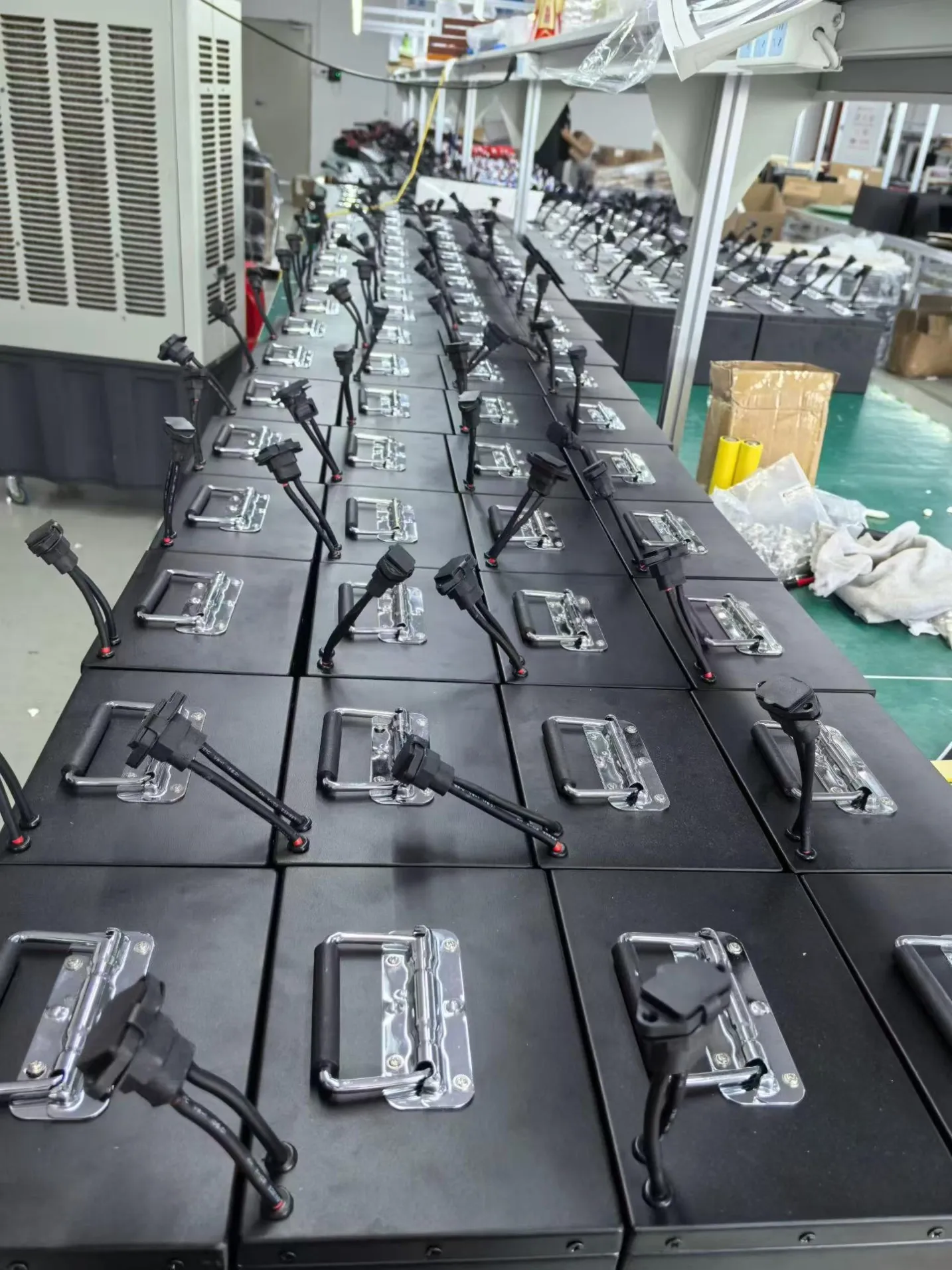
Five things to confirm before placing an order
- Test conditions, in writing — At what speed, with what load, and on what terrain was the range measured? Ask for the full picture: speed, load, terrain, and whether the figure is a single test result or the maker's standard claim. A seller who ran a real test can describe it. A seller who cannot describe the test is asking you to carry the risk. Keep the answer with your order file, so that if a dispute comes later, you are comparing your customers' experience against a written statement, not against a memory of a phone call.
- Battery cell brand and grade — Are the cells new Grade-A cells from a named maker, and is a cell specification sheet available? Two packs with identical voltage and capacity can behave very differently over their life depending on the cells inside. Ask for the cell maker and grade to be named, and keep the specification sheet with the order. If a quotation is much cheaper than others for the "same" capacity, the cells are one of the first places to look.
- Usable vs. nominal capacity — Some figures quote the pack's theoretical capacity, not what the controller actually allows you to use. Ask directly whether the stated capacity is the nominal pack figure, and how much of it the vehicle can actually draw on in normal riding. This single question explains many "the maths said one thing, the road said another" cases, and it costs you one line in an email.
- Cycle life and warranty terms — How many cycles until the battery falls to 80% capacity, and what exactly does the battery warranty cover, for how long? No warranty period is published on our site, so do not accept one from a brochure, a chat message or your own assumption: confirm the cycle-life figure and the full warranty terms — what is covered, what is excluded, and how a claim is handled — in writing before you order, and build your retail promises to your own customers only on what you have in writing.
- A sample test you control — Order a sample, ride it on your own roads, with your own typical load, and record the result before committing to a container. Run the test the way your customers ride: your typical rider, your typical load, your normal routes and speeds, starting from a full charge and recording the distance and the conditions. Write everything down — date, configuration, load, route, weather, result — because a recorded test is evidence you can act on, while an impression is not. If the sample result and the written test conditions tell the same story, you can order with confidence. If they do not, you have learned it at sample cost instead of container cost.
What we do differently
We would rather give you the figures to check than a number to trust. For models such as the LB-CS, the product page states the headline specification openly: a 1500W motor, lithium or lead-acid battery options of 60V/72V 32Ah, a maximum speed of 45 km/h, charging of 4–6 hours, and delivery in 15 days. That gives you the voltage and capacity you need to run the 60-second check in this article before you even contact us. Lubon is based in Jiangxi, and its electric two-wheelers are produced at our Wuxi base, where the mature two-wheeler supply chain helps keep specifications and parts consistent.
When you enquire, ask us for the battery configuration in writing, the cell specification sheet for the configuration you are buying, and the test conditions behind any range figure we quote — and order a sample and test it on your roads, with your load, before placing a volume order. We support that sequence because it is the sequence that protects both sides: you set your customers' expectations from your own test, and we are measured against conditions we stated in advance.
Bottom line: Do not buy range claims. Buy battery capacity, test conditions and warranty terms you can verify. That is how professional importers avoid the "100 km that became 65 km" problem — and keep their customers coming back.
Looking for an electric two-wheeler supplier who shares full battery and test data before you order? Contact us for specifications and a sample: email saravehicle@jxlubon.com or WhatsApp +86 189 7035 3905.